
Shockwave Therapy
Shockwave therapy (SWT) uses focused acoustic sound waves, delivered through the skin with a handheld device, to address pain in muscles, tendons and joints.
Service
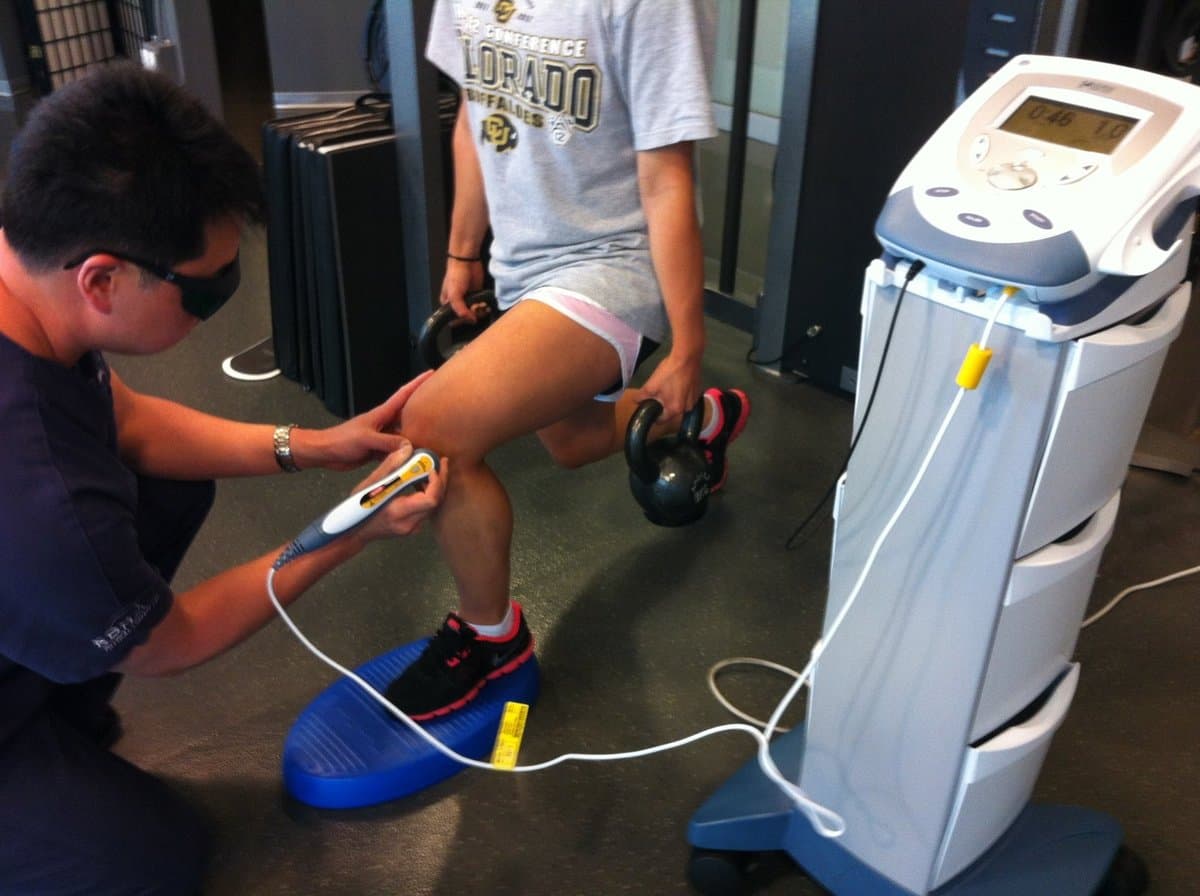
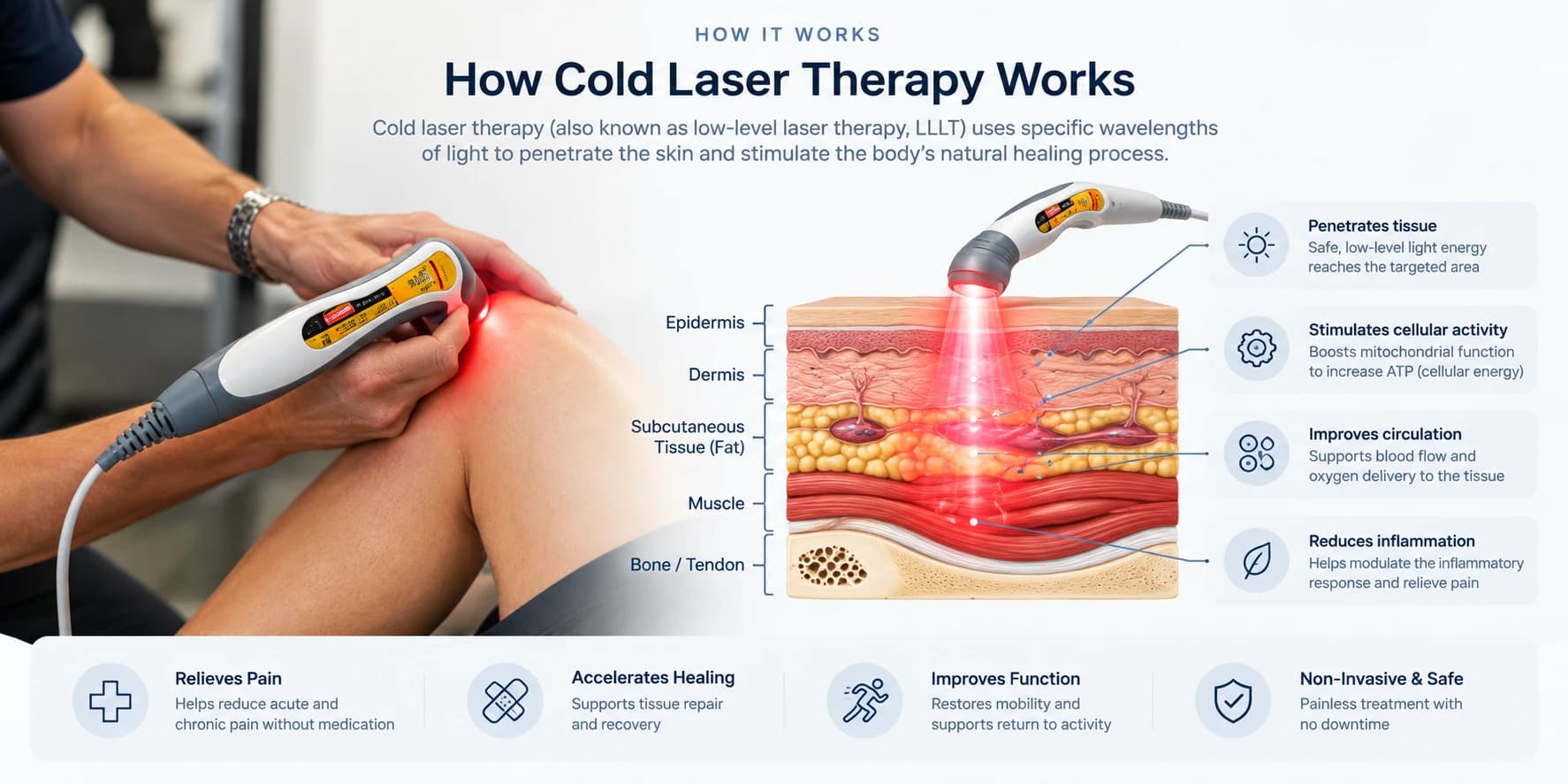
Cold laser therapy uses a Class III laser to deliver light to injured tissue. It is mainly used to help reduce inflammation, which is a common source of pain after sprains, strains, and tendon or bursa irritation.
When tissue is injured or not getting enough oxygen and nutrients, healing can slow down. Over time, a thick band of scar tissue can form across a muscle and limit how freely it moves and your natural range of motion.
At KOH Physical Therapy Lab, cold laser therapy is used as one part of an individualized plan, often alongside other treatments such as shockwave therapy, kinesiology taping, fascia stretching, and Active Release Technique.
Benefits
Who it is for
The technique
Your physical therapist holds a handheld device over the injured area for anywhere from about 30 seconds to several minutes, depending on the size of the area.
The laser gives off non-heating light that passes through the layers of the skin and can reach about 2 to 5 centimeters below the surface. There it is absorbed by light-sensitive parts of the cells, which is thought to start a series of changes that help injured tissue return to normal.
Treatment
Treatment times are usually under 5 minutes, so cold laser therapy fits well alongside traditional soft tissue treatments in the same visit. It is typically given 2 to 3 times per week, and your therapist sets the schedule for your condition.
Research
Low-level laser therapy has been used around the world for more than twenty years and has been studied across a wide range of conditions. In the United States, low-level laser devices have FDA clearance for the temporary relief of pain and stiffness, including pain and stiffness associated with arthritis.
Results vary from person to person, and your therapist uses cold laser therapy as one part of a plan that includes hands-on care and exercise.
FAQ
Related
Shockwave therapy (SWT) uses focused acoustic sound waves, delivered through the skin with a handheld device, to address pain in muscles, tendons and joints.
Kinesiology therapeutic taping uses an elastic tape applied to specific areas of the body to support muscles, tendons, and ligaments, help relieve pain and swelling, and support athletic performance.
Fascia stretching therapy is therapist-assisted stretching and mobility work for plantar fasciitis, neck pain, and other musculoskeletal conditions. It works on the whole connective tissue system, not just single muscles.
Request an appointment online, or text our scheduling team. Text is the fastest way to reach us.