
Active Release Technique
Active Release Technique (ART) is a non-invasive, movement-based soft tissue technique designed to locate and treat soft tissue problems. Your physical therapist applies pressure to a tight area while you move it.
Service
Shockwave therapy, also called extracorporeal shockwave therapy (ESWT), was first introduced in 1980 as a non-invasive way to break up kidney stones and gallstones. Today it is commonly used in physical therapy clinics for pain in the muscles, tendons and joints, including acute and chronic sports and overuse injuries, and it offers a non-invasive option for people hoping to avoid surgery or long-term pain medication.
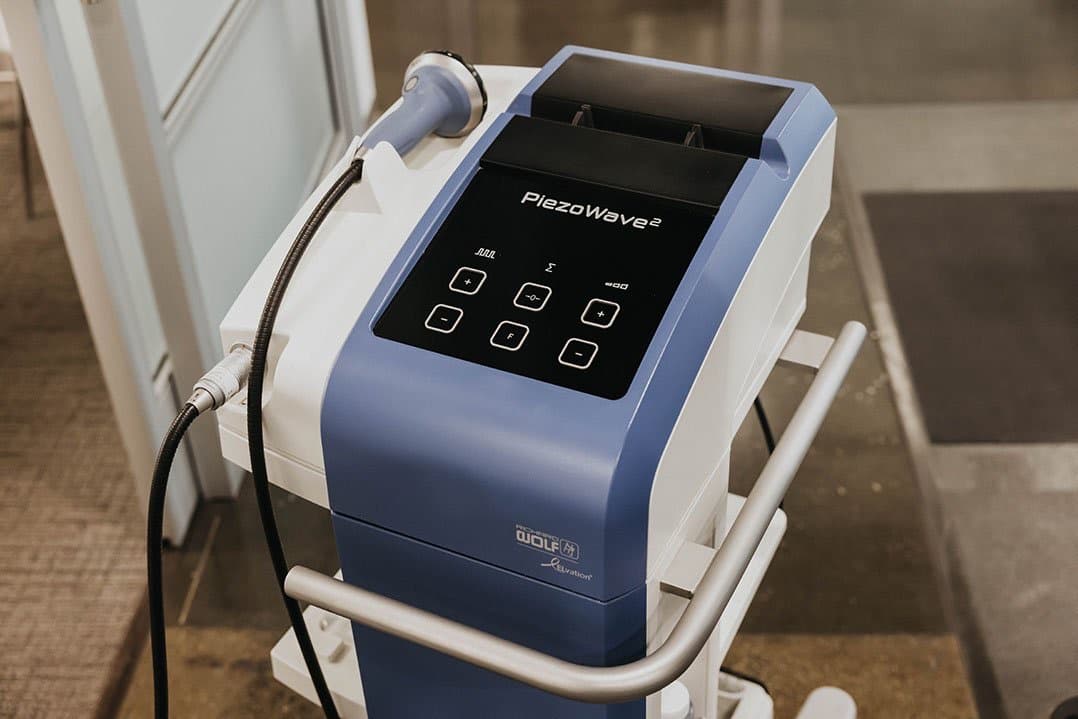
We offer focused shockwave therapy using a PiezoWave² unit. Focused shockwaves concentrate energy on specific points and reach deeper tissues. Radial shockwaves, a different type, spread more widely and mainly reach tissue near the surface.
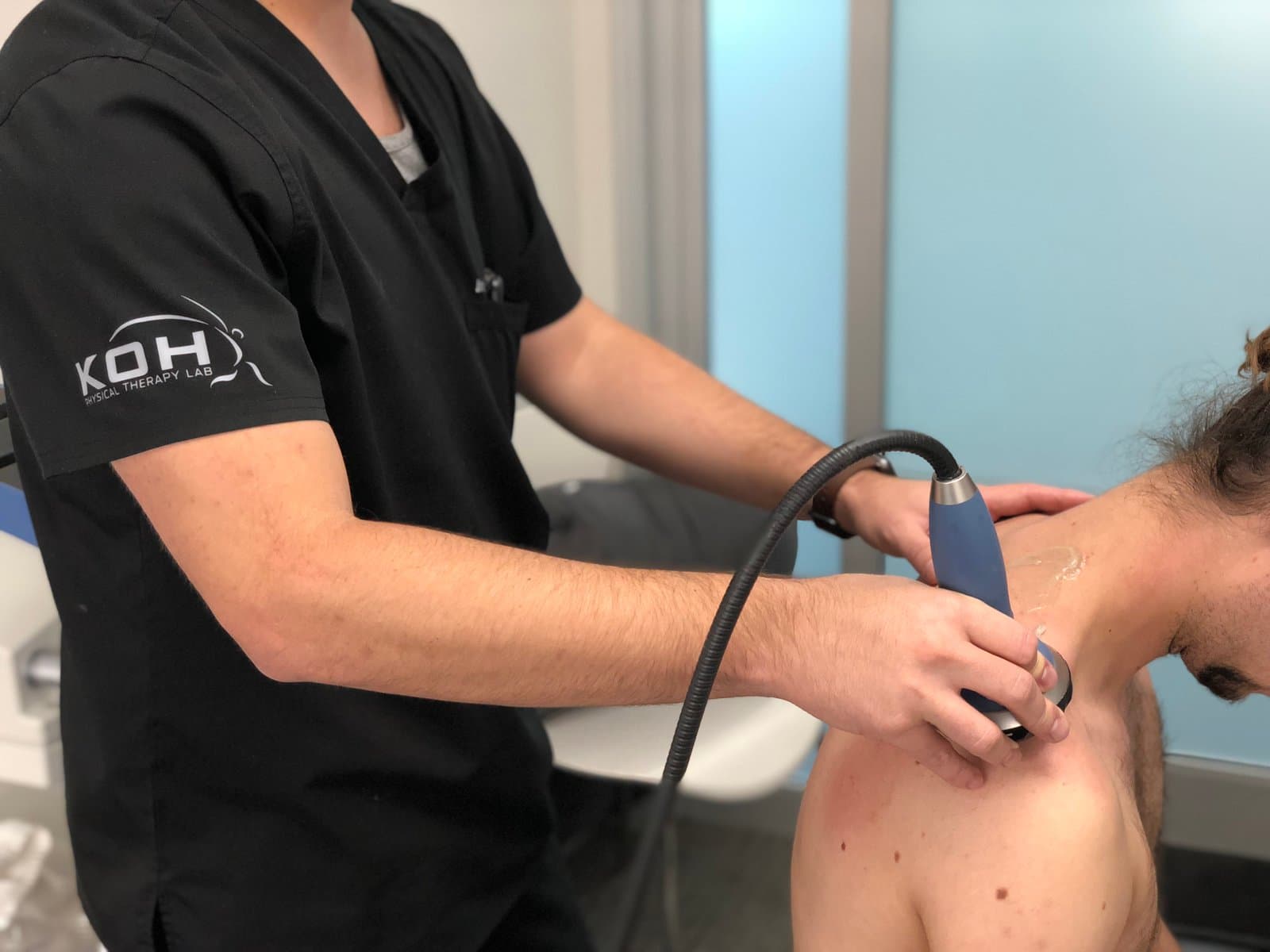
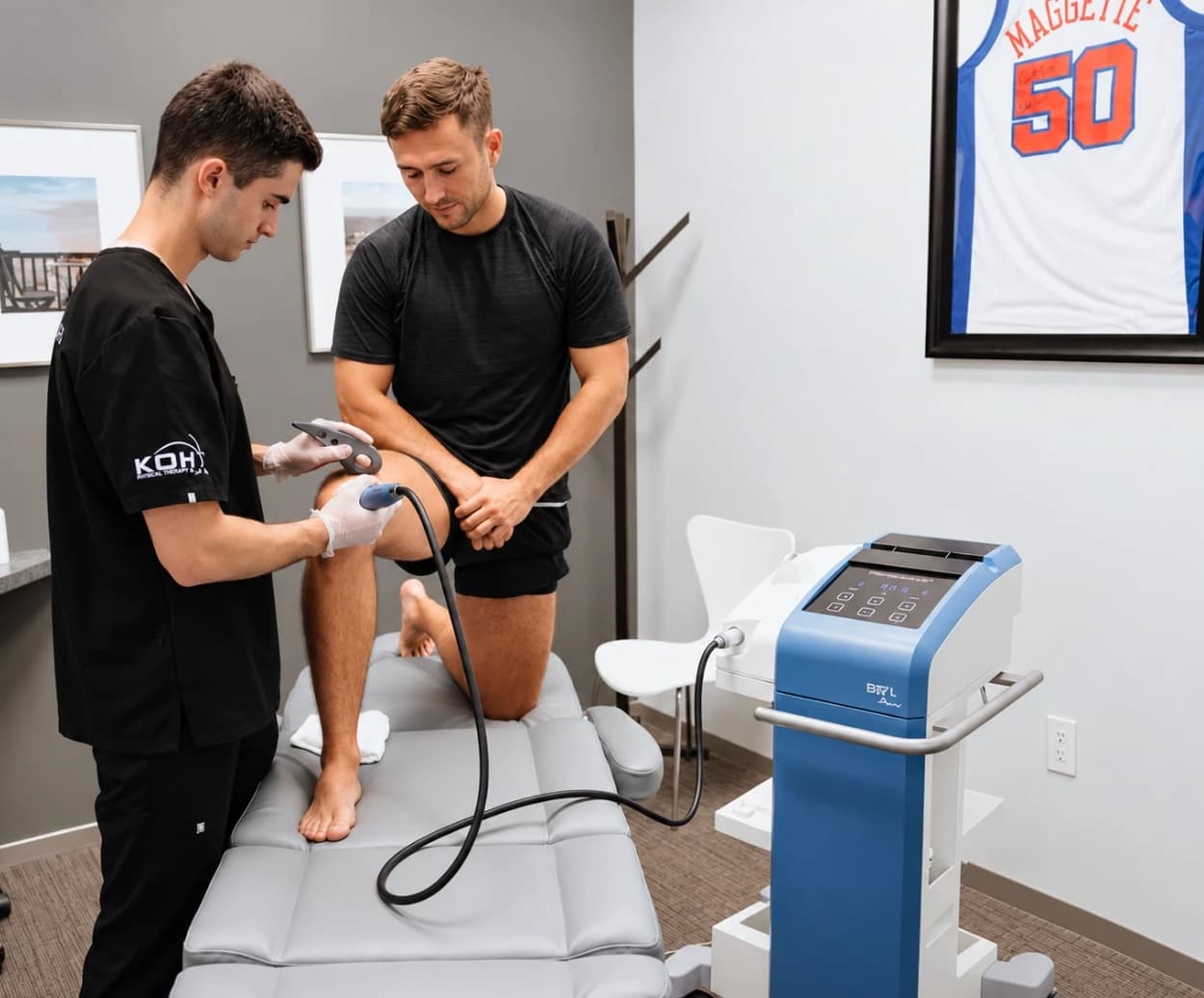
During treatment, a conducting gel is applied to the skin and a handheld applicator sends acoustic waves to the target tissue. Tendons, ligaments, bone and blood vessel cells respond to this kind of mechanical energy, which may increase local blood flow and support the body's repair process.
Many professional sports teams use shockwave therapy for their athletes, including NBA teams such as the Los Angeles Lakers and LA Clippers, NFL teams such as the Los Angeles Rams and Los Angeles Chargers, and teams in the NHL.
“We’re thrilled to be the first physical therapy clinic in Orange County to offer Shockwave Therapy to our patients.”
In your plan of care
After your evaluation, shockwave may be a stand-alone plan of care, or your physical therapist may combine it with hands-on treatment and a progressive exercise program, so the treated tissue is loaded and strengthened as it recovers.
It may be considered when tendon or soft tissue pain has lingered, or when earlier care has not been enough. Your therapist decides during your evaluation whether it fits your condition, and screens for reasons it should not be used.
Contact us for more information, including pricing.
Benefits
Conditions
The technique
Shockwave therapy uses high-energy acoustic sound waves to reach tissue at different depths. The waves compress and work the tissue, much like a focused, precise deep tissue massage, which can increase circulation and ease pain.
The PiezoWave² delivers mechanical energy as sound waves to the target tissue. Cells in tendons, ligaments, skin, bone, cartilage and blood vessels all respond to this kind of mechanical energy. Your therapist can locate trigger points and deliver focused pulses to the right depth, between about 0.5 millimeters and 3 centimeters depending on the applicator, to support cellular repair by increasing blood flow and reducing pain.
Research
The evidence for shockwave therapy varies by condition. For plantar fasciitis, a 2023 systematic review and meta-analysis found high-quality evidence of a large effect on pain and function. The same review found little or inconclusive benefit for patellar and Achilles tendinopathy.
For plantar fasciitis, a 2024 systematic review found that shockwave therapy reduced pain and improved foot function more than corticosteroid injections at three and six months. The most common side effects were local pain and slight skin redness.
It is also used for other tendon conditions, such as tennis elbow and calcific tendonitis of the shoulder, where the evidence differs by condition. Your physical therapist evaluates your condition to decide whether shockwave is an option for you.
Safety
Side effects are usually mild and short-lived. In plantar fasciitis studies, the most common were local pain and slight skin redness. Some swelling, bruising or tenderness can appear after a session and usually settles within a few days.
Soreness after treatment is thought to come from the tiny areas of controlled stress the shockwaves create in tissue such as tendon, muscle and bone, which prompt blood flow and cell regeneration. Sensitive areas can feel uncomfortable for a short time afterward.
Your therapist screens you before treatment. If you have neuropathy or hypersensitivity in the area, your therapist decides with you whether shockwave is appropriate.
Men's pelvic health
Low-intensity shockwave therapy (Li-ESWT) is also studied as a treatment for erectile dysfunction. A small handheld applicator delivers low-energy sound waves to penile tissue, with the aim of improving blood flow.
A 2022 review in American Family Physician found mild to moderate improvement with no significant side effects. The American Urological Association considers it investigational, the European Association of Urology says it may be used for mild ED caused by reduced blood flow, and it is not FDA approved specifically for ED. At KOH Physical Therapy Lab, shockwave may be recommended and combined with men's pelvic health care. Contact us for more information, including pricing.
Read more: shockwave therapy for erectile dysfunction →
FAQ
Related
Active Release Technique (ART) is a non-invasive, movement-based soft tissue technique designed to locate and treat soft tissue problems. Your physical therapist applies pressure to a tight area while you move it.
Cold laser therapy, also called red light therapy or low-level laser therapy, is used for muscle and nerve pain from sprains, bursitis, tendonitis, and more. A handheld device delivers non-heating light to the injured area.
Fascia stretching therapy is therapist-assisted stretching and mobility work for plantar fasciitis, neck pain, and other musculoskeletal conditions. It works on the whole connective tissue system, not just single muscles.
Request an appointment online, or text our scheduling team. Text is the fastest way to reach us.