

Treatments & Techniques
Spinal Manipulation for Back Pain: What New Research Shows
Does spinal manipulation for back pain work? We break down the latest trials and reviews, who benefits, safety, and how PTs combine it with exercise.
Published
On this page
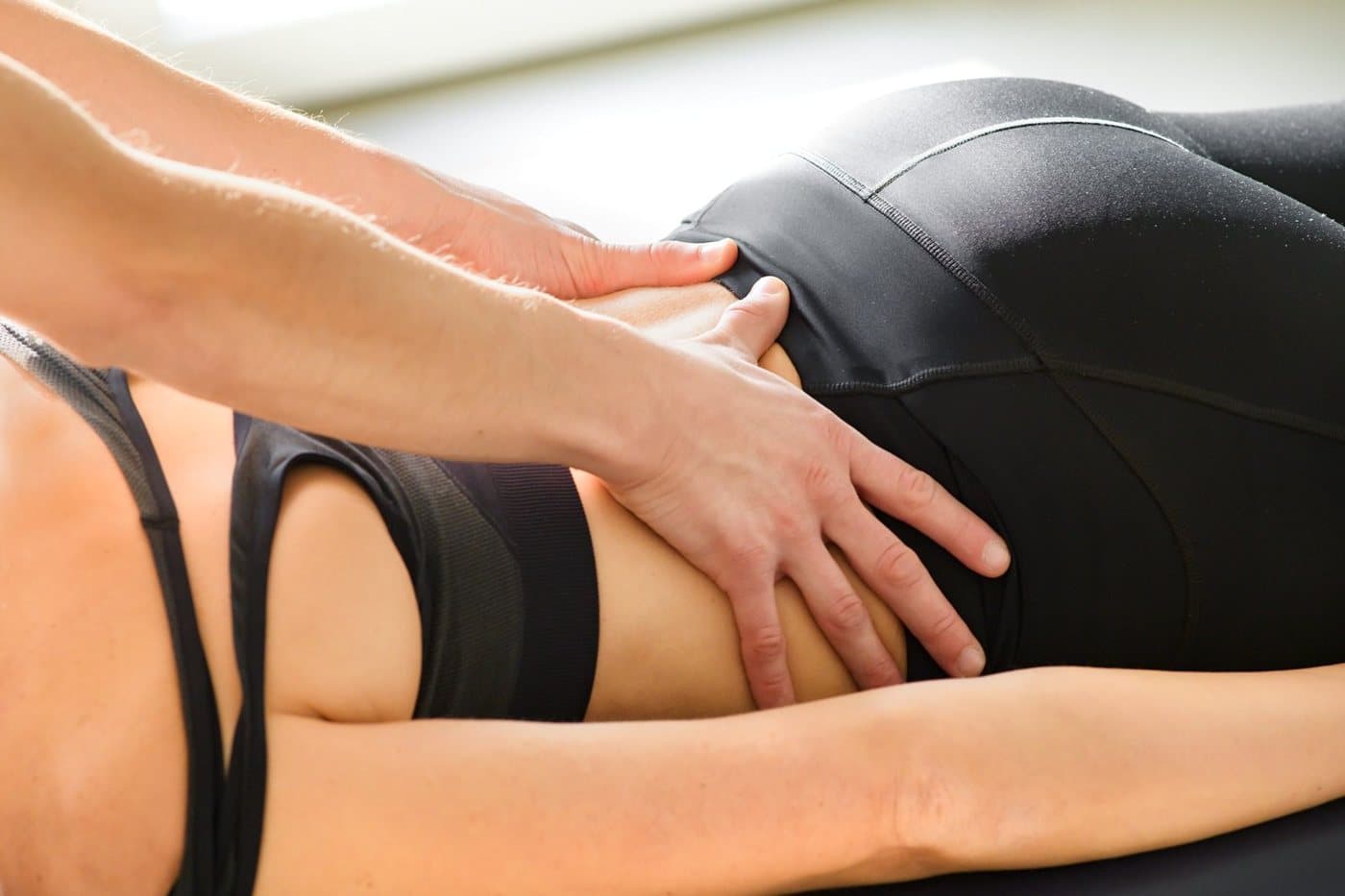
If you have ever had your back "adjusted," you have experienced spinal manipulation: a quick, small-amplitude thrust applied to a joint of the spine, often accompanied by a pop. Spinal manipulation for back pain is one of the most studied hands-on treatments in musculoskeletal care, and physical therapists, chiropractors and osteopathic physicians all use it. But what does the research actually say about who benefits, how much, and how safe it is?
Two important papers published in the last two years give a clearer picture: a large network meta-analysis in the Journal of Orthopaedic & Sports Physical Therapy (JOSPT) in 2025, and a 1,000-person randomized trial published in JAMA in February 2026. Together with earlier reviews, they point to a consistent message: manipulation can help some people a modest amount, it works best as part of a broader plan, and it is not a stand-alone cure.
What is spinal manipulation, exactly?
Clinicians use a few related terms:
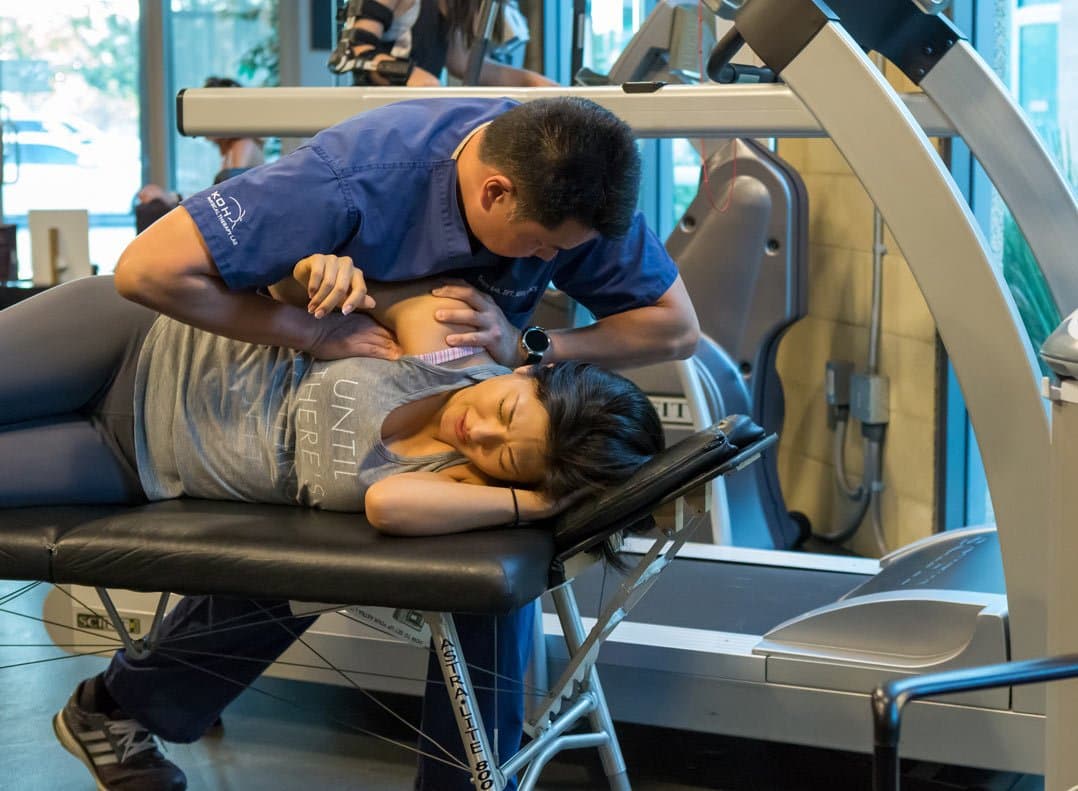
- Thrust manipulation (sometimes called high-velocity, low-amplitude or HVLA technique) is a fast, controlled push that takes a spinal joint, such as a lumbar facet (zygapophyseal) joint, slightly past its usual range of motion. The audible "pop" is gas releasing within the joint capsule; it is not a bone "going back into place."
- Nonthrust mobilization uses slower, rhythmic, graded movements without the quick thrust.
- Spinal manipulative therapy (SMT) is the umbrella term researchers use for both.
The audible "pop" is gas releasing within the joint capsule; it is not a bone "going back into place."
The idea that a manipulation "realigns" the spine is not supported by current evidence. Researchers think the benefits are more likely related to short-term changes in how the nervous system processes pain, muscle guarding and movement, which can open a window for people to move and exercise more comfortably.
What the research found
Acute low back pain (less than about 6 weeks)
A 2017 systematic review in JAMA by Paige and colleagues pooled 15 randomized trials (1,711 participants) for acute low back pain. Spinal manipulation was associated with an improvement of roughly 10 points on a 100-point pain scale and a modest improvement in function at up to 6 weeks. The authors noted that many included trials were of low quality and results varied widely between studies.
The newest and largest trial adds an important nuance. The PACBACK randomized clinical trial (Bronfort and colleagues, JAMA, 2026) enrolled 1,000 adults with acute or subacute low back pain who were judged to be at moderate to high risk of developing chronic pain. Participants received spinal manipulation, clinician-supported "biopsychosocial" self-management (education, coaching and strategies to stay active and manage pain), both, or guideline-based medical care, for up to 8 weeks. Over 12 months:
- Supported self-management, alone or combined with manipulation, produced a small but statistically significant reduction in back-related disability compared with medical care (about 1 point on the 24-point Roland-Morris Disability Questionnaire).
- Spinal manipulation on its own did not significantly reduce disability compared with medical care.
- Pain intensity did not differ significantly between groups.
In other words, for people at risk of their back pain becoming long-lasting, the active, education-and-coaching piece seemed to matter more than the manipulation itself.
Chronic low back pain (more than about 12 weeks)
A 2019 systematic review and meta-analysis in The BMJ (Rubinstein and colleagues) analyzed 47 randomized trials with more than 9,000 participants with chronic low back pain. Moderate-quality evidence showed that spinal manipulation produced effects similar to other recommended therapies, such as exercise, for pain relief, with a small, clinically relevant edge for short-term function. Comparisons with sham (placebo) manipulation were based on low- to very-low-quality evidence, so it remains uncertain how much of the benefit is specific to the technique.
Does the technique matter?
Clinicians often debate which spinal level to target, whether to use thrust or nonthrust techniques, and which specific maneuver is "best." A 2025 network meta-analysis in JOSPT (Nim and colleagues) addressed this directly. The team pooled 161 randomized trials with 11,849 adults with spine pain. Most manipulation approaches performed similarly to guideline-recommended treatments and slightly better than other comparison treatments, and differences between specific procedures were small and not clinically meaningful. A general, non-targeted approach was as likely as any to be effective. The evidence certainty was low, and the authors concluded clinicians can reasonably choose techniques based on patient preference and comfort.
What do clinical guidelines say?
The physical therapy clinical practice guideline on low back pain published in JOSPT in 2021 (George and colleagues, on behalf of the Academy of Orthopaedic Physical Therapy) recommends that physical therapists use thrust or nonthrust joint mobilization to reduce pain and disability in both acute and chronic low back pain. The same guideline strongly recommends exercise training for chronic low back pain, which is why manipulation is usually paired with an active program rather than used alone.
How safe is spinal manipulation?
Mild, short-lived side effects are common: temporary soreness, stiffness, or a headache that typically settles within a day or two. In the 2017 JAMA review, these minor effects were frequent, and no serious adverse events were reported in the included trials. The 2019 BMJ review similarly found adverse events were musculoskeletal, transient and mild to moderate.
A 2023 systematic review in BMJ Open (Gorrell and colleagues) looked at 154 randomized trials of spinal manipulation published between 2016 and 2022. Among the 7,518 participants in trials that reported harms, no serious adverse events occurred. However, the reviewers also found that reporting of side effects in these trials is still inconsistent and below accepted standards, so the true rate of rare complications cannot be stated with precision from trials alone. That is why a careful screening exam before any manipulation is essential.
Practical takeaways and best practices
- Stay as active as you can. For most new back pain, gentle walking and normal daily activities are encouraged over bed rest.
- Ask how manipulation fits into the plan. A good plan usually combines hands-on care with specific exercise, education about back pain, and a gradual return to activity.
- Expect a short course. If manipulation is going to help, people often notice a change within a few visits. Ongoing "maintenance adjustments" are not well supported for most people.
- Speak up about your comfort. Thrust techniques are not required. Nonthrust mobilization and other approaches are reasonable alternatives with similar average results.
- Expect a screening exam. Your clinician should ask about your medical history, check neurological signs, and look for warning signs before using manipulation.
When to see a physical therapist
Consider seeing a physical therapist if:
- Back or neck pain is limiting your work, sleep or daily activities
- Pain has lasted more than a couple of weeks, or keeps coming back
- You want a plan that combines hands-on treatment with exercise and self-management
- You are worried your pain may become long-lasting
Seek urgent medical care instead if back pain comes with loss of bladder or bowel control, numbness in the groin or inner thighs (saddle area), progressive leg weakness, fever, unexplained weight loss, a history of cancer, or significant trauma such as a fall or car accident.
Expert care at KOH Physical Therapy Lab
At KOH Physical Therapy Lab, our physical therapists perform a thorough evaluation and, when appropriate, use spinal manipulation and mobilization as part of an evidence-based plan built around movement, exercise and education.
References
- Bronfort G, Meier EN, Leininger B, Schneider M, Evans R, Greco C, et al. Spinal manipulation and clinician-supported biopsychosocial self-management for acute back pain: the PACBACK randomized clinical trial. JAMA. 2026;335(6):497. doi:10.1001/jama.2025.21990
- Nim C, Aspinall SL, Cook CE, Corrêa LA, Donaldson M, Downie AS, et al. The effectiveness of spinal manipulative therapy in treating spinal pain does not depend on the application procedures: a systematic review and network meta-analysis. J Orthop Sports Phys Ther. 2025;55(2):1-14. doi:10.2519/jospt.2025.12707
- Gorrell LM, Brown BT, Engel R, Lystad RP. Reporting of adverse events associated with spinal manipulation in randomised clinical trials: an updated systematic review. BMJ Open. 2023;13(5):e067526. doi:10.1136/bmjopen-2022-067526
- George SZ, Fritz JM, Silfies SP, Schneider MJ, Beneciuk JM, Lentz TA, et al. Interventions for the management of acute and chronic low back pain: revision 2021. J Orthop Sports Phys Ther. 2021;51(11):CPG1-CPG60. doi:10.2519/jospt.2021.0304
- Rubinstein SM, de Zoete A, van Middelkoop M, et al. Benefits and harms of spinal manipulative therapy for the treatment of chronic low back pain: systematic review and meta-analysis of randomised controlled trials. BMJ. 2019;364:l689. doi:10.1136/bmj.l689
- Paige NM, Miake-Lye IM, Booth MS, Beroes JM, Mardian AS, Dougherty P, et al. Association of spinal manipulative therapy with clinical benefit and harm for acute low back pain: systematic review and meta-analysis. JAMA. 2017;317(14):1451. doi:10.1001/jama.2017.3086
Common questions
Does spinal manipulation put the spine back into alignment?
The idea that a manipulation "realigns" the spine is not supported by current evidence. Researchers think the benefits are more likely related to short-term changes in how the nervous system processes pain, muscle guarding and movement, which can open a window for people to move and exercise more comfortably.
What is the pop during a spinal manipulation?
The audible "pop" is gas releasing within the joint capsule; it is not a bone "going back into place."
Is spinal manipulation safe?
Mild, short-lived side effects are common: temporary soreness, stiffness, or a headache that typically settles within a day or two. Serious harms appear rare in trials, but reporting of side effects is still inconsistent, which is why a careful screening exam before any manipulation is essential.
For educational purposes only. This article is general information and is not medical advice. It does not replace an evaluation by a licensed healthcare provider. If you think you are having a medical emergency, call 911.
Watch
Related videos
Joint thrust mobility work
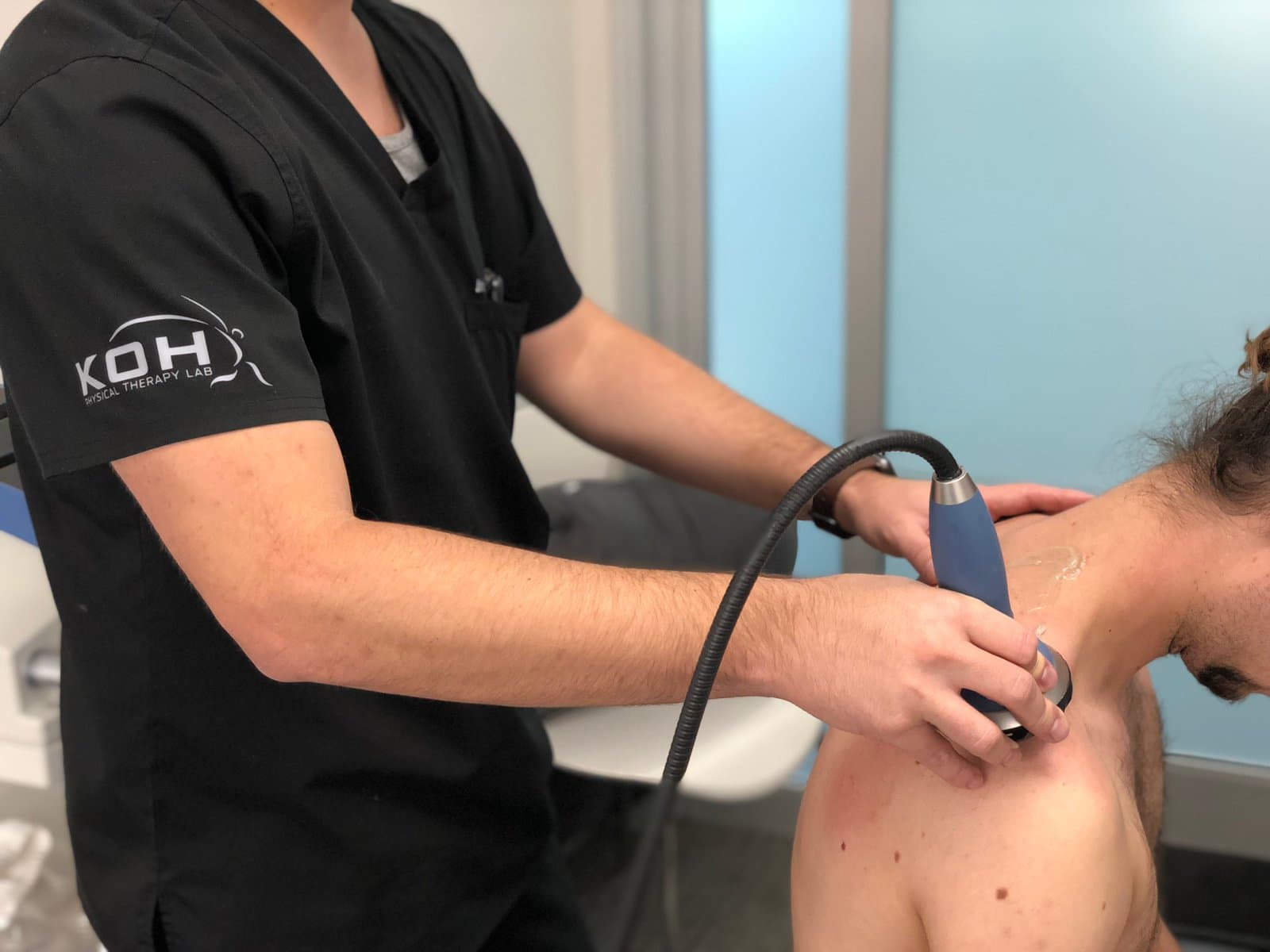
An instrument-assisted fascial technique for the low back
From the KOH Physical Therapy Lab YouTube channel. See more exercise and technique videos
Have questions about physical therapy?
Learn more about KOH Physical Therapy Lab services, or request an appointment.