
Treatments & Techniques
Shockwave Therapy for Shoulder Calcific Tendinitis: What the Evidence Shows
Can shockwave therapy for shoulder calcific tendinitis ease pain and restore motion? What 2024-2025 research shows, and how it fits with physical therapy.
Published
On this page
Shockwave therapy can ease pain and improve shoulder function for many people with calcific tendinitis, and recent research suggests it works best at higher energy, aimed at the deposit, and combined with exercise-based physical therapy. It is not a guaranteed fix, and calcium deposits do not always disappear.
If a sharp, nagging shoulder pain has kept you from reaching overhead or sleeping on one side, and an X-ray showed a chalky white spot in your rotator cuff, you may have calcific tendinitis. It is one of the more common reasons people ask about shockwave therapy for shoulder pain. This article walks through what recent research says about extracorporeal shockwave therapy (ESWT) for calcium deposits in the rotator cuff, where it fits alongside physical therapy, and what realistic expectations look like.
What is calcific tendinitis of the shoulder?
Calcific tendinitis (also called calcific tendinopathy) happens when calcium hydroxyapatite crystals collect inside a rotator cuff tendon, most often the supraspinatus, which runs under the acromion and helps lift the arm. Deposits can sit quietly for years. During the body's own resorptive phase, though, the area can become intensely painful and inflamed, and the subacromial bursa can be irritated as well.
Many people improve without surgery. A 2025 review in SICOT-J by Moya and colleagues summarized reported success rates of 60% to 80% for conservative care in chronic cases, while also noting that a meaningful number of people live with recurring pain and limited motion. Factors linked to a tougher course included large deposits, deposits on both shoulders, and certain deposit locations and appearances on imaging.
What is shockwave therapy, and what is the difference between focused and radial?
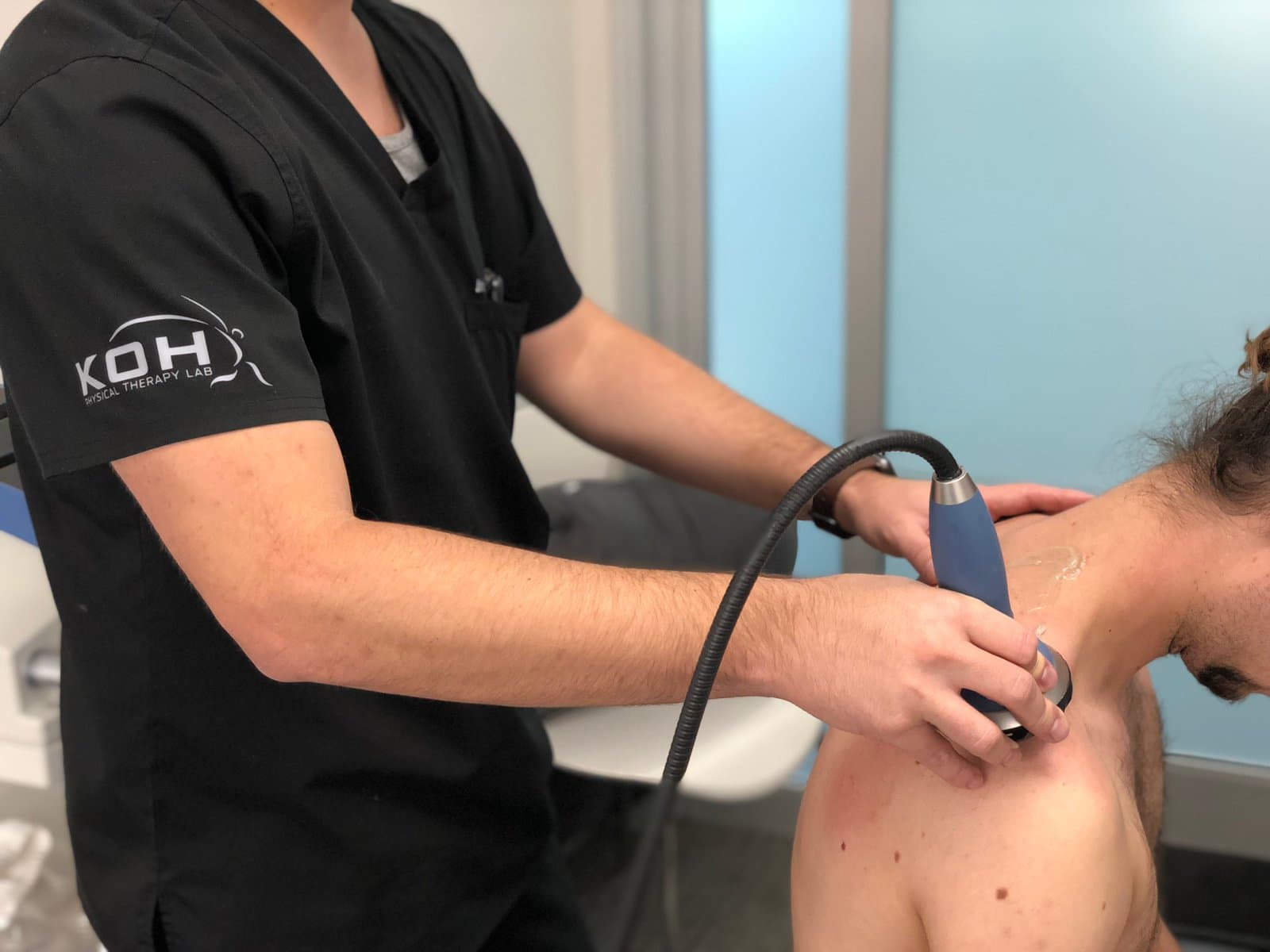
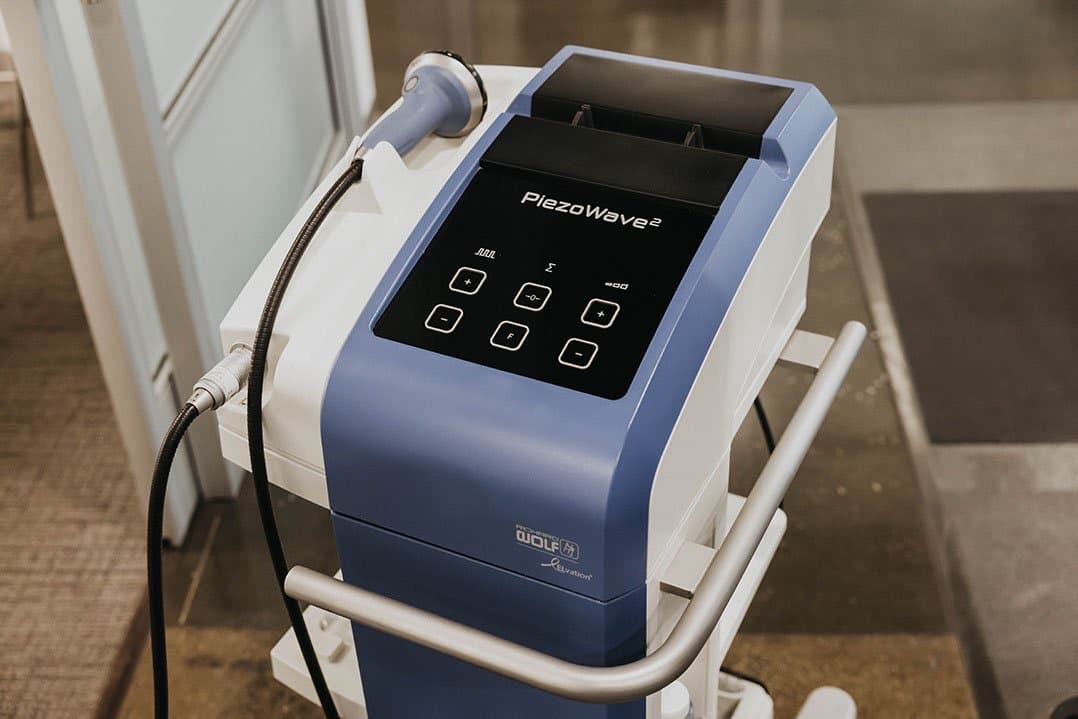
Shockwave therapy delivers short, high-pressure acoustic pulses through the skin to the target tissue. There are two broad types, and the difference matters:
- Focused shockwave concentrates energy at a specific depth and can be aimed at the deposit, often with imaging guidance.
- Radial pressure wave devices (often marketed as "radial shockwave") spread energy outward from the applicator and are strongest at the skin surface.
Moya and colleagues point out that these two are frequently lumped together under "ESWT," even though they differ in physics, devices and likely mechanism. That distinction comes up again in the research below.
What does the research show?
A large network meta-analysis (2025)
Yao and colleagues, publishing in EFORT Open Reviews in 2025, compared 26 different treatments across 33 randomized controlled trials for rotator cuff calcific tendinitis. Using a ranking method that estimates which option is most likely to perform best:
- For shoulder function, comprehensive physical therapy ranked first among nonsurgical options, with high-energy shockwave combined with physical therapy ranked second.
- For pain relief, radial shockwave combined with physical therapy ranked first.
- For surgery, arthroscopic removal of the deposit with bursectomy and cuff debridement performed about as well with or without adding subacromial decompression.
The authors also noted an important gap: there is no direct trial data comparing surgical and nonsurgical approaches, and they could not pool results on whether deposits actually shrank.
Shockwave for rotator cuff tendinopathy overall (2024)
Xue and colleagues (BMC Musculoskeletal Disorders, 2024) pooled randomized trials of ESWT for rotator cuff tendinopathy, including both calcific and non-calcific cases. Compared with control treatments, shockwave was associated with lower pain scores and better Constant-Murley shoulder function scores, plus better external rotation. However, only five of the included studies were rated low risk of bias, heterogeneity was high, and the authors themselves described the evidence as limited and called for more high-quality trials.
Energy level appears to matter (2024)
A 2024 meta-analysis in Frontiers in Medicine by Xiong and colleagues looked at ESWT for upper limb tendonitis. In the calcific rotator cuff subgroup, shockwave improved Constant-Murley function at three months (a mean difference of about 5.8 points). Across rotator cuff studies, high-energy treatment produced a noticeably larger functional gain (about 18.5 points) than low-energy treatment (about 7.6 points), suggesting a dose-response effect. Low-energy shockwave did not significantly reduce pain in the calcific subgroup. Side effects reported across trials were mostly temporary: brief pain during treatment, redness, swelling or small bruises.
Focused versus radial: what experts say (2025)
The SICOT-J review gave high-energy focused shockwave a strong recommendation grade based on meta-analyses, and it cited reports of deposit resorption above 80% with focused protocols, though that figure comes largely from a treatment protocol paper rather than a large trial. The same review rated the evidence for radial pressure waves as limited and contradictory. It also noted that a failed course of shockwave did not appear to compromise later surgery, and that shockwave produced results comparable to surgery at lower cost in the studies reviewed.
What this means in plain language
Putting these studies together:
- Shockwave can help many people with calcific shoulder tendinitis, but it is not a guaranteed fix. Trials generally show improvements in pain and function compared with control treatments, yet study quality varies, and the size of benefit differs a lot between trials.
- Higher energy, well-targeted treatment appears to work better than low-energy treatment for function. Device type and protocol matter.
- Exercise-based physical therapy is not optional. In the largest comparison, comprehensive physical therapy ranked first for function, and the top-ranked shockwave options were those combined with physical therapy.
- Calcium does not reliably "dissolve." Some deposits shrink or disappear after treatment, and some do not. Imaging changes and symptom relief do not always line up.
- There are other good options. Ultrasound-guided lavage (barbotage), where a needle is used to break up and rinse out the deposit, is another established nonsurgical approach and outperformed corticosteroid injection in studies cited by Moya and colleagues. Surgery is generally reserved for people who have not improved after roughly six months of nonsurgical care or who have large deposits causing mechanical problems.
Calcium does not reliably "dissolve." Some deposits shrink or disappear after treatment, and some do not.
What should you know before trying shockwave for your shoulder?
- Get the diagnosis right. Shoulder pain has many causes, including rotator cuff tears, frozen shoulder (adhesive capsulitis), referred neck pain and arthritis. Imaging (X-ray and often ultrasound) confirms a deposit and helps guide treatment.
- Ask what kind of device and energy level is being used. Focused and radial devices are not interchangeable, and the evidence differs between them.
- Expect a series, not a single session. Protocols in trials typically use several sessions spaced about a week apart. Temporary soreness afterward is common.
- Pair it with a progressive exercise program. Rotator cuff and scapular strengthening, gradual return of range of motion, and posture and load management help the shoulder tolerate daily and athletic demands.
- Manage load sensibly. Painful flare-ups often respond to temporarily reducing overhead work and sleeping with a pillow under the arm, then building back up.
- Know who should not have it. Shockwave is generally avoided over areas with infection, tumors, open growth plates or during pregnancy, and people on blood thinners or with bleeding disorders need medical guidance first. Your clinician should screen you before treatment.
Is shockwave for the shoulder the same as shockwave for sexual health?
No. Low-intensity shockwave is also being studied for erectile dysfunction and Peyronie's disease pain, and we cover the erectile dysfunction research in our article on what shockwave therapy is. In short: results are promising in some studies, but the treatment is still considered investigational by the American Urological Association, and it uses different devices and settings from shoulder treatment.
When should you see a physical therapist for shoulder pain?
Consider an evaluation if you have:
- Shoulder pain lasting more than a few weeks, especially with reaching overhead or behind your back
- Night pain that wakes you up or keeps you from lying on that side
- Weakness or a painful arc when lifting the arm out to the side
- An X-ray or ultrasound showing a calcium deposit in the rotator cuff
- Difficulty with work tasks, dressing, grooming or sports because of your shoulder
Seek prompt medical care for sudden severe pain with fever, redness or swelling, a shoulder injury from a fall with inability to lift the arm, or pain accompanied by chest pressure or shortness of breath.
A physical therapist can assess range of motion, strength and movement patterns, coordinate with your physician on imaging, and build a rehabilitation plan. An occupational therapist can help you adapt daily tasks and work setups so you can keep functioning while the shoulder recovers.
Shoulder care at KOH Physical Therapy Lab
At KOH Physical Therapy Lab, our physical therapists evaluate shoulder pain with a full movement and strength assessment and build exercise-based plans tailored to your goals. We offer focused shockwave therapy, and if you are curious whether it makes sense as part of your plan, we will talk through the evidence, the alternatives and what to realistically expect. Contact us to schedule an evaluation.
References
- Yao Y, Yang G, Jiang S, Ji B, Jin H, Tang P, Li H, Lu B, Li Y. Treatments for rotator cuff calcific tendinitis: a systematic review and network meta-analysis of randomized-controlled trials. EFORT Open Rev. 2025;10(7):520-533. doi:10.1530/eor-2024-0078
- Xue X, Song Q, Yang X, Kuati A, Fu H, Liu Y, Cui G. Effect of extracorporeal shock wave therapy for rotator cuff tendinopathy: a systematic review and meta-analysis. BMC Musculoskelet Disord. 2024;25:357. doi:10.1186/s12891-024-07445-7
- Xiong Y, Wen T, Jin S, Lin L, Shao Q, Peng Y, Zheng Q, Li W. Efficacy and safety of extracorporeal shock wave therapy for upper limb tendonitis: a systematic review and meta-analysis of randomized controlled trials. Front Med (Lausanne). 2024;11:1394268. doi:10.3389/fmed.2024.1394268
- Moya D, Rashid M, Rowinski S, Al-Qahtani S, Bernáldez Domínguez P, Gómez D, Dallo I. Therapeutic options in rotator cuff calcific tendinopathy. SICOT J. 2025;11:9. doi:10.1051/sicotj/2025003
Common questions
Does shockwave therapy work for calcific tendinitis of the shoulder?
It can help many people, but it is not a guaranteed fix. Trials generally show improvements in pain and function compared with control treatments, yet study quality varies and the size of benefit differs a lot between trials. The best-ranked shockwave options in a 2025 network meta-analysis were those combined with physical therapy.
Does shockwave therapy dissolve calcium deposits in the shoulder?
Not reliably. Some deposits shrink or disappear after treatment, and some do not. Imaging changes and symptom relief do not always line up.
Is focused or radial shockwave better for calcific tendinitis?
A 2025 review in SICOT-J gave high-energy focused shockwave a strong recommendation grade based on meta-analyses, and rated the evidence for radial pressure waves as limited and contradictory. The two are not interchangeable: focused shockwave concentrates energy at a specific depth, while radial devices are strongest at the skin surface.
How many shockwave sessions are needed for the shoulder?
Expect a series, not a single session. Protocols in trials typically use several sessions spaced about a week apart, and temporary soreness afterward is common.
What are the side effects of shockwave therapy?
Side effects reported across trials were mostly temporary: brief pain during treatment, redness, swelling or small bruises.
For educational purposes only. This article is general information and is not medical advice. It does not replace an evaluation by a licensed healthcare provider. If you think you are having a medical emergency, call 911.
Watch
Related video
Soft tissue work and acoustic compression on a hamstring tendon
From the KOH Physical Therapy Lab YouTube channel. See more exercise and technique videos

Have questions about physical therapy?
Learn more about KOH Physical Therapy Lab services, or request an appointment.