
Treatments & Techniques
Thermal Therapy: Hot and Cold Agents for Pain Relief
Dr. Davis Koh reviews the research on ice and heat: how each works, which forms change tissue temperature, protocols, contraindications and where they still fit in care.
By Davis Koh, DPT, MBA, GCS, CSCS
Published

On this page
Delving into the latest research on hot and cold agents for pain relief.
Heat and cold modalities have been around for many years. They are among the oldest and simplest modalities available to the clinician. The principles of heat and cold have spawned many topical agents as well as wraps, different types of ice packs, chemical ice packs, cold rooms, cold plunge pools, infrared saunas and more.
The benefits, theories and biological effects of heat and cold have been well documented for years. The question is, are they really effective, and how should the sports medicine clinician administer them?
"End of the ice"?
One thing I learned from the physicians at UCLA Medical Center was that every 5 years, 50 percent of what we learn in medicine will be incorrect, and it will always change. I believe with regard to heat and cold modalities, there are no absolutes regarding effectiveness. Some new research is pronouncing the "end of the ice" and the positivity of new, better forms of ice. I believe that, to some extent, they are proving that there's a time and place for each modality, ice and heat included.
Ice and heat modalities are inexpensive, easy to access, portable, available in a variety of applications and easily administered. Downfalls and risks include ice burns, heat burns, going against contraindications, exacerbation of symptoms or pain, and substituting them for a more beneficial exercise or therapeutic agent.
Types of cryotherapy include ice packs, chemical ice, ice wraps, cold plunges, cold rooms and ice compression machines. They are used to promote vasoconstriction of blood vessels and decreased blood flow within the first 15 to 20 minutes, decrease metabolic rate, and provide topical pain relief for muscle spasms. Risks can include fainting episodes and damage to superficial sensory nerves.
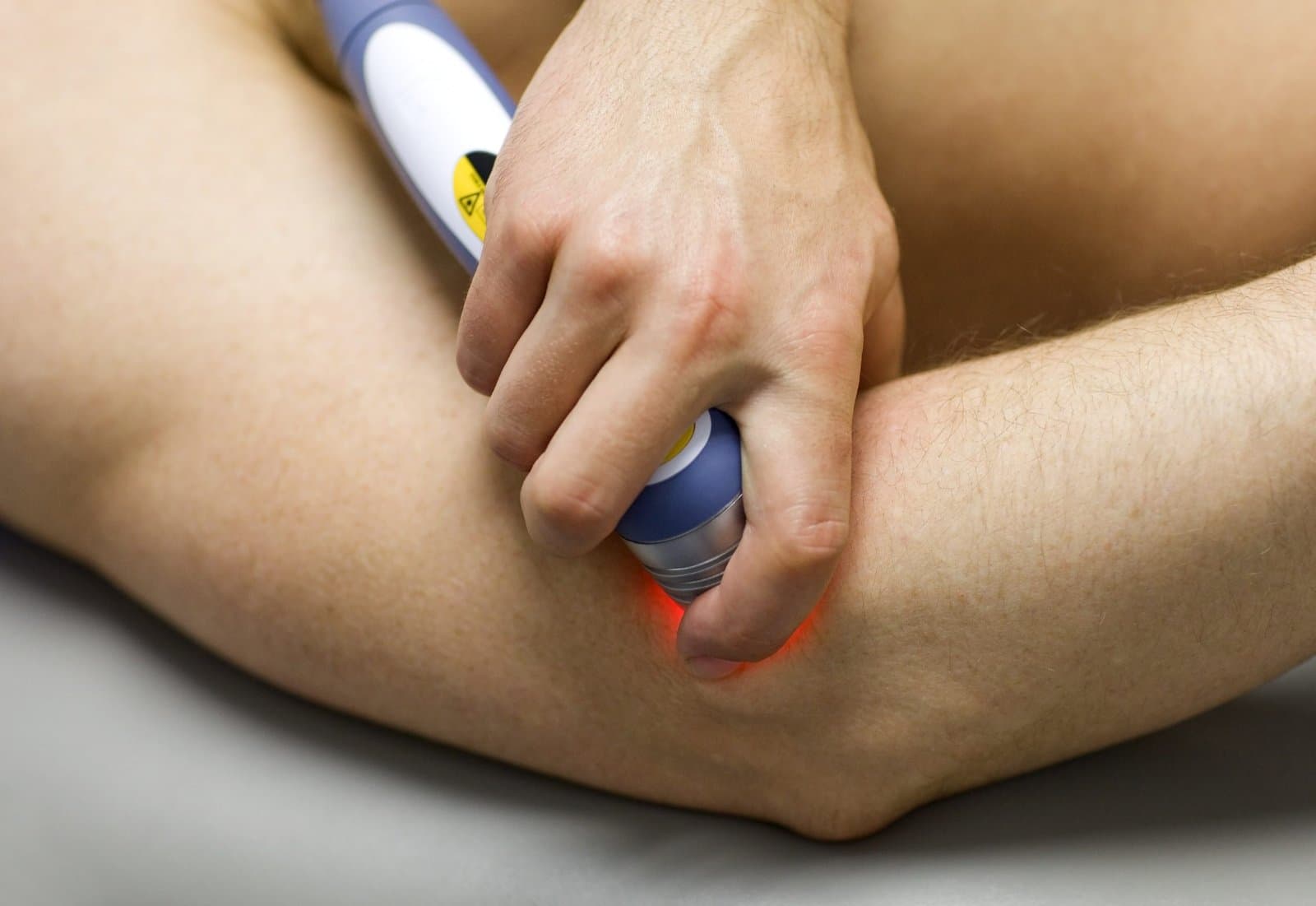
Examples of thermotherapy include heat packs, heat wraps, hot water baths, infrared modalities, Class IV laser modalities and topical creams. They are used to promote vasodilation of blood vessels resulting in increased blood flow, increased metabolic rate, relaxation of muscle spasm, pain relief via the gate control mechanism, and increased elasticity of connective tissue.
There's a time and place for each modality, ice and heat included.Davis Koh, DPT
Treatment protocols
Indications and theories for thermal modalities have all been well documented. But which options work best, and what protocol will best create specific physiological results?
When using ice, keep in mind that ice mixed with water is superior for reducing surface skin temperature compared with cubed or crushed ice. For reducing intramuscular temperature, cubed ice mixed with water ("wetted ice") is better than crushed ice or chemically based ice packs, as cubed ice will absorb more heat from the tissues as it melts over time, while a chemically based cold pack does not absorb the heat. Crushed ice melts too quickly compared with cubed ice to adequately absorb heat from intramuscular tissue, and is therefore limited in reducing tissue temperature.
Topical cooling agents such as menthol cryotherapy agents actually can delay the recovery rate rather than improve it, because topical solutions do not actually lower the temperature of intramuscular tissue or skin. Rather, the active menthol simply numbs the area, giving only the perception that the tissues beneath the skin are being lowered in temperature, and thus removing some of the positive effects of cold therapy. As for pain relief, recent literature still suggests that further studies are needed to prove conclusively that cryotherapy has a greater effect than placebo.
Physical therapists must also be mindful that subcutaneous fat impairs the effects of heat modalities. Heat agents require a longer time to transfer positive temperature changes into deep muscular tissue. Therefore, rapid heating agents such as whirlpool may not be as effective unless the patient remains in the whirlpool for a certain period of time.
Dry heat packs that last for longer periods may prove beneficial for creating positive temperature changes in deeper tissues for patients with large amounts of subcutaneous fat. The ability to change intramuscular temperature can be adversely affected in patients whose BMI is greater than 25, which will require longer periods of ice and heat to create a therapeutic effect.
Effects on chronic pain
Both cryotherapy and heat therapy are still prescribed for pain relief by healthcare professionals. The specific situation and diagnosis will always play a part in deciding which one is appropriate.
One example is a study of pain relief, measured subjectively, in patients with osteoarthritis using 20-minute heat application compared with a control group receiving medication from other physicians only. The intervention group experienced statistically significant improvement in subjective pain measurements compared with the control group.
Studies claim that heat therapy is an effective modality for recovery time for athletes in training; however, evidence is still lacking to that effect. There is also conflicting information regarding intermittent cryotherapy versus standard, constant application of cold in terms of subjective pain measurements. One study compared an intermittent protocol with a standard ice protocol for acute ankle sprain. Patients using intermittent icing showed statistically significant improvement in subjective pain measurements; however, the differences disappeared after one week of ice treatments.
The latest literature is still mixed as to whether ice or heat should be used to treat chronic pain. The effectiveness of ice and heat seems to lean toward short-term effects. Current research also shows that modality type is nonspecific, and that different types of cold can deliver similar effects without statistically significant differences, such as cool air blowing versus liquid nitrogen.
Risks and contraindications
Ice and heat are contraindicated over the epiphyseal growth plates. Chronic heat applied over a period of time may increase the amount of growth hormone delivered to the growth plate area via vasodilation, which may result in overgrowth of the limb compared to the opposite limb. Likewise, cold applied over time may have the opposite effect, constricting the amount of growth hormone reaching the growth plate area.
Research suggests that much of the therapeutic effect of topical agents is as a pain analgesic, with no evidence of actually increasing or decreasing tissue temperature beneath the skin enough to produce a therapeutic effect. Be careful when combining topical agents with a traditional hot or ice pack, as it may create extreme pain.
Regarding hot and cold contrast baths, the prevailing theory is mainly to flush out fluids by acting as a pump when heat follows ice. So far, the latest research has not determined a specific timeframe or amount of heat or ice. Therefore, the protocol of administering 5 minutes of ice and 10 minutes of heat, or vice versa, has yet to be substantiated.
However, the fluid pump theory is sound, especially according to research into recovery following an extreme workout. The latest research still discourages applying ice or heat for more than 20 minutes at a time, to protect the patient from injury while maintaining maximum benefit. Anything beyond the first 20 minutes has not been shown to be any more effective.
More significantly, more than 20 minutes of heat can lead to pooling of the blood in the area, and more than 20 minutes of ice can lead to ice burns or chemical burns, in some cases up to a fourth-degree burn if using a cryotherapy machine. One patient suffered such a burn with a cryotherapy device, resulting in the permanent loss of the VMO muscle in her left knee, and subsequently sued the company.
The latest research suggests that ice mixed with water creates temperature change in the intramuscular tissue more effectively than crushed ice or cubed ice alone.
A final consideration relates to the cultural or personal beliefs of the patient or athlete. Almost all my athletes traditionally use an icy-hot topical agent before each race, and no amount of research is going to change their routine. Likewise, athletes who grew up on cold plunges and ice packs after training or competition will not easily deviate from their routine, no matter what the research says. Be sensitive to a person's beliefs and routine, as any changes can lead to adverse psychological effects.
Standing the test of time
Ice and heat modalities have stood the test of time. Though research is still spotty, they are low cost, easy to use and among the most portable modalities available to the clinician. These modalities, like others, have no absolutes. They have their place and are still good options for pain relief, edema control, increasing circulation and preventing additional injury due to the inflammatory process.
Remember that not all ice and heat agents are made the same. Topical heating and icing agents only affect surface pain and tissue, and act as a pain analgesic without changing skin surface or intramuscular temperature.
I believe that ice and heat modalities will have their place in the future as low-cost treatment options. If used for a specific diagnosis and a specific purpose, while avoiding all contraindications, ice and heat will always have a place in the physical therapy and sports medicine worlds.
Resources
- Bleakley C, McDonough S, Gardner E, Baxter GD, Hopkins JT, Davison GW. Cold-water immersion (cryotherapy) for preventing and treating muscle soreness after exercise. Cochrane Database Syst Rev. 2012;2:CD008262.
- Garra G, et al. Heat or cold packs for neck and back strain: a randomized controlled trial of efficacy. Acad Emerg Med. 2010.
- Gregson W, Black MA, Jones H, Milson J, Morton J, Dawson B, Atkinson G, Green DJ. Influence of cold water immersion on limb and cutaneous blood flow at rest. Am J Sports Med. 2011;39:1316-1323.
- Ho SS, Illgen RL, Meyer RW, Torok PJ, Cooper MD, Reider B. Comparison of various icing times in decreasing bone metabolism and blood flow in the knee. Am J Sports Med. 1995;23(1):74-76.
- Jakeman JR, Macrae R, Eston R. A single 10-min bout of cold-water immersion therapy after strenuous plyometric exercise has no beneficial effect on recovery from the symptoms of exercise-induced muscle damage. Ergonomics. 2009;52:456-460.
- Leeder J, Gissane C, van Someren K, Gregson W, Howatson G. Cold water immersion and recovery from strenuous exercise: a meta-analysis. Br J Sports Med. 2012;46:233-240.
- McMaster WC. A literary review on ice therapy in injuries. Am J Sports Med. 1977;5(3):124-126.
- Meeusen R, Lievens P. The use of cryotherapy in sports injuries. Sports Med. 1986;3:398-414.
- Merrick MA, Knight KL, Ingersoll CD, Potteiger JA. The effects of ice and compression wraps on intramuscular temperatures at various depths. J Athl Train. 1993;28(3):236-245.
- Quinn E. After exercise: does ice water protocols speed recovery? 2008.
- Sellwood KL, Brukner P, Williams D, Nicol A, Hinman R. Ice-water immersion and delayed-onset muscle soreness: a randomised controlled trial. Br J Sports Med. 2007;41:392-397.
- Vaile JM, Gill ND, Blazevich AJ. The effect of contrast water therapy on symptoms of delayed onset muscle soreness. J Strength Cond Res. 2007;21:697-702.
- Vaile J, Halson S, Gill N, Dawson B. Effect of hydrotherapy on recovery from fatigue. Int J Sports Med. 2008;29:539-544.
- Vaile J, Halson S, Gill N, Dawson B. Effect of hydrotherapy on the signs and symptoms of delayed onset muscle soreness. Eur J Appl Physiol. 2008;102:447-455.
- Weston M, Taber C, Casagranda L, Cornwall M. Changes in local blood volume during cold gel pack application to traumatized ankles. J Orthop Sports Phys Ther. 1994;19(4):197-199.
- Wilcock IM, Cronin JB, Hing WA. Physiological response to water immersion: a method for sport recovery? Sports Med. 2006;36:747-765.
Originally published in ADVANCE for Physical Therapy & Rehab Medicine as "Thermal Therapy," April 8, 2014.
For educational purposes only. This article is general information and is not medical advice. It does not replace an evaluation by a licensed healthcare provider. If you think you are having a medical emergency, call 911.
Have questions about physical therapy?
Learn more about KOH Physical Therapy Lab services, or request an appointment.